
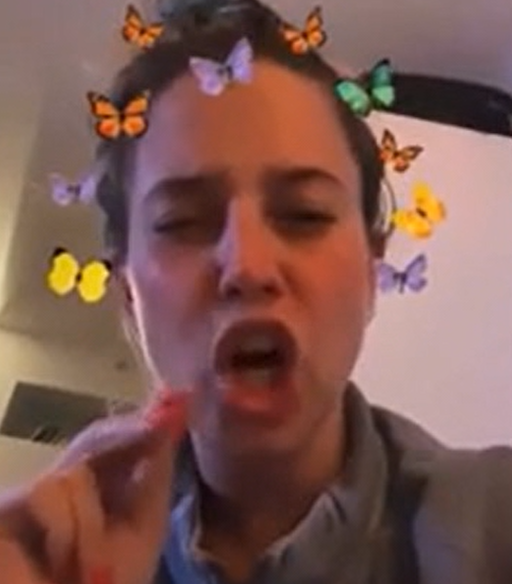
After nearly six years of litigation, the defamation lawsuit between Tanya Zuckerbrot and social media influencer Emily Gellis Lande has been settled. The terms are remarkable.
Gellis will pay Zuckerbrot $500 per month for the next 40 years, for a total of $240,000. She must also record a lengthy video apology using language agreed to as part of the settlement. The apology will be pinned to the top of her social media accounts, including Instagram and Facebook, for three and a half years, and must remain in her feeds for another year and a half after that.
The settlement brings an end to a dispute that started in 2020, when Gellis began posting allegations about Zuckerbrot and F-Factor, the successful diet and nutrition company Zuckerbrot had built.
Thousands of Posts About F-Factor and Tanya Zuckerbrot
Zuckerbrot sued Gellis in October 2020 for defamation and other claims. According to the lawsuit, F-Factor’s monthly revenue had fallen from approximately $1 million to less than $90,000 after Gellis’s campaign began. Zuckerbrot also alleged the loss of an investment opportunity and enormous damage to her reputation and business. F-Factor ultimately shut down shortly after all of this started.
See the feature article in the New York Post here. (PDF version here.)
This lawsuit wasn’t over a handful of Instagram posts criticizing a diet program. It arose from a relentless attack Emily launched against Tanya with little substantive proof to support her accusations. In a 2022 decision in the case, Judge Joel M. Cohen described what happened as a “barrage” of more than 4,500 Instagram posts over a period of only 75 days. He said the “posts level serious, specific accusations against [Tanya and F-Factor], often in intensely personal and vulgar terms.”
If you’re wondering what those posts were like, here are a few samples:
Gellis had at least 200,000 Instagram followers at the time. Her posts accused F-Factor products of containing harmful ingredients and causing serious health problems, accused the company of concealing safety problems and engaging in unlawful conduct, and included accusations directed personally at Zuckerbrot.
Even during the litigation, Emily couldn’t help herself. She insulted and defamed Tanya repeatedly. This is one example, in which Emily called Tanya an embarrassment, scum, and a “trash bucket of society.”
The Apology Video
The most interesting part of the settlement may be the apology video that Emily must record, publish on social media, and pin to the top of her profile giving it great exposure. She agreed to record it verbatim. She cannot add verbal, nonverbal, or digital commentary, and she cannot change it without Tanya’s written consent. The settlement even requires her to make an effort to look toward the recording device while reading it.
The script is unusually detailed. In it, Gellis says that instead of verifying information she encountered about F-Factor in 2020, she amplified it, and what started as an inquiry became a “sustained and harmful campaign that was not grounded in verified facts.” She acknowledges making claims that F-Factor products caused anxiety, hair loss, heart attacks, miscarriages, and death, and says those claims were not supported by verified evidence.
Gellis also acknowledges she relied heavily on anonymous and unverified social media information rather than medical, scientific, or qualified expert analysis. The apology says she blocked Zuckerbrot and others who attempted to respond and then continued her campaign.
Emily must further state in the video that she contacted media outlets, Bloomingdale’s, brand partners, celebrity clients, and ambassadors. She admits telling Bloomingdale’s it was selling “poison” and pressuring people associated with Zuckerbrot to denounce her or distance themselves from F-Factor.
The required apology acknowledges that Emily accused Tanya of tax violations, drug use, and criminal activity. She also compared Zuckerbrot to Jeffrey Epstein, Harvey Weinstein, and the Sackler family, called her a “danger to society,” and said she was “killing people.” The apology states that these claims and comparisons were false and had no factual basis.
She also acknowledges mocking Tanya after she spoke publicly about the toll the campaign had taken on her mental health, creating and promoting merchandise that ridiculed her, commenting on her appearance, and repeatedly monitoring and posting about Tanya’s personal life, travel, and family.
This wasn’t simply a disagreement over the safety of a diet product that flared up and disappeared. Gellis’s own required apology characterizes her behavior as excessive and invasive and says it contributed to sustained harassment and significant personal distress.
The apology Gellis has agreed to publish will directly address the consequences to F-Factor. She acknowledges that her actions affected Zuckerbrot’s reputation, business, employees, and family and contributed to lost opportunities. She also apologizes to F-Factor clients for creating confusion and fear and for the loss of a brand they valued.
The Settlement
The financial portion of the agreement is straightforward: $500 per month for 40 years, totaling $240,000. If Emily defaults and fails to cure the default after receiving notice, Zuckerbrot can seek a judgment for the unpaid balance. (Emily often said on social media that she’d run to bankruptcy court with any judgment Tanya got against her. However, due to the willful nature of this defamation, Emily will likely have a very difficult time in bankruptcy court.)
The social media portion of the settlement is more unusual. Gellis’s apology must remain pinned for three and a half years and stay in her feeds for another year and a half. She cannot alter it, archive it, make it private, or disable public comments.
There is also a restrictive provision governing what either woman can say about the settlement. If Gellis is asked about the resolution by the media, her followers, or anyone else, her agreed response is simply: “The litigation between Ms. Zuckerbrot and me has been settled.” Zuckerbrot is required to give the same response.
Both women confirmed the settlement personally in court, and Judge Cohen stated on the record that he considered it a binding settlement agreement. There is one important legal qualification: The settlement says it represents a compromise of disputed claims and does not constitute an admission of fact, wrongdoing, or a violation of law by either party.
So while the settlement agreement itself says that it’s not an admission of wrongdoing, the video Emily will record is going to say otherwise. She will very clearly say that she did bad things and made false statements. And this video apology will sit at the top of her social media accounts for three and a half years.
The video will end simply: “I was wrong. And I am sorry.”
There are no winners in litigation like this. A business was destroyed. Emily tried to destroy Tanya personally. This video is important, but it is not nearly enough to compensate Tanya Zuckerbrot for all that she lost. Nonetheless, I congratulate her for holding Emily Gellis Lande accountable until the end. This was necessary and important.
One more video: Emily telling Tanya they have to “wrap this shit up” in the most unhinged way.



Don’t have AI write your articles . It’s obvious
Awwww, nice try, Kate. No, I wrote it. But even if I didn’t, does that change the facts? No, it does not. Emily is a monster and none of this ever fully restores Tanya. But the fact that your friend has had to make this public video is a great start and I love that she can never erase the truth of what she did.